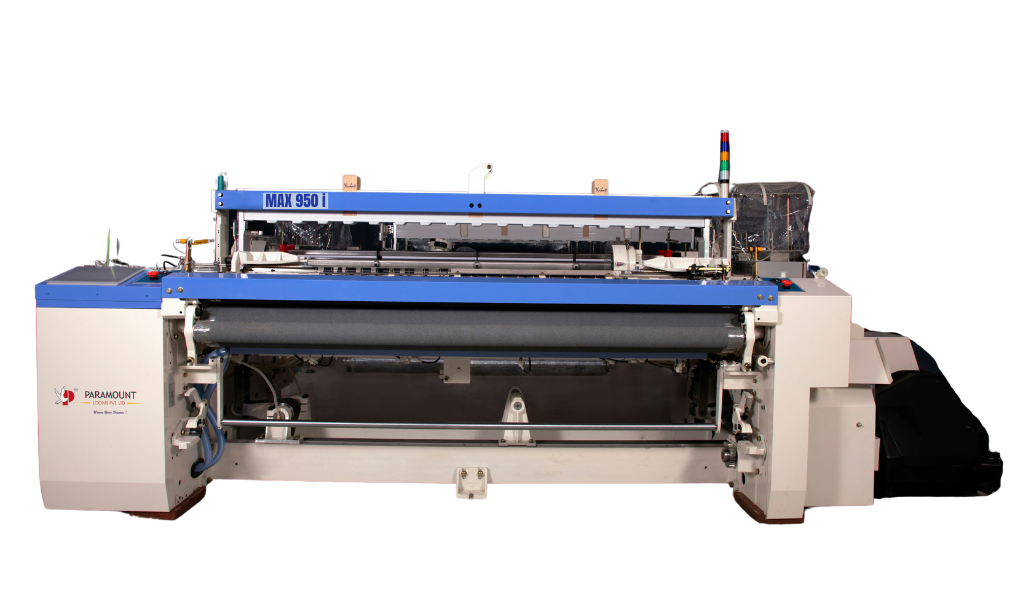
Textile weaving machines selected around fabric construction, yarn behavior, productivity goals and long-term operating cost.
Erode
Paramount Looms Pvt. Ltd.
Weaving Machine Manufacturer, Supplier & Trader in Erode
Paramount Looms supports weaving businesses in Erode with multiple machine technologies for converting warp and weft yarn into finished fabric. Choosing the right weaving machine requires a production view: fabric range, yarn, width, style changes, operator skill, utilities, maintenance and target cost per meter all matter.
Textile Weaving Machine solutions for changing production requirements
Modern weaving machines combine mechanical structure, shedding, weft insertion, take-up, let-off, sensing and controls. The relative importance of each system changes according to the fabric and the chosen technology.
A mill that produces one high-volume synthetic article may need a different machine from a unit that switches between multiple fancy fabrics every week. Paramount’s product range allows those business conditions to be part of the selection process.
Shuttleless options for higher productivity and reduced mechanical weft handling.
Conventional options for familiar service and established fabric programs.
Electronic control, dobby and jacquard options for greater design flexibility.
Automation upgrades for selected power-loom installations.
Business support
Manufacturer, Supplier and Trader support in Erode
Manufacturer
Weaving-machine engineering for real fabric programs
As a Weaving Machine manufacturer, Paramount Looms designs the machine around the method used to insert weft and control the fabric formation process. For customers in Erode, the first task is to identify the product mix and then select the most appropriate air jet, water jet, rapier, shuttle or related technology.
The manufacturing discussion covers the mechanical structure and the production systems that influence fabric quality: shedding, take-up, let-off, weft control, sensors, automation and operator interface. The importance of each system changes according to the selected weaving technology.
This application-led approach is useful for both new units and established mills because it links the machine specification to cost per meter, changeover needs, workforce skills and the type of fabric the plant expects to sell.
Fabric-led technology selection and machine engineering.
Mechanical and electronic systems matched to the selected weaving process.
Planning that considers productivity, changeovers and operating cost together.
Supplier
Supply with technical configuration support
As a Weaving Machine supplier in Erode, Paramount Looms can support the complete buying process from technical clarification to dispatch. The buyer can provide yarn, fabric width, construction, weave, colors, daily output and available utilities so the proposed configuration is based on real requirements.
The supply discussion then covers model, reed space, shedding, beam arrangement, take-up, let-off, controls, accessories, spare expectations and site readiness. This is especially important for customers adding a new weaving technology that needs different compressor, water or electrical infrastructure.
Delivery scheduling, installation communication and operator guidance can be planned according to the project. The final scope depends on the machine and commercial terms selected by the customer.
Requirement capture before model and option selection.
Utility and site-readiness discussion for the chosen technology.
Coordinated supply, delivery and commissioning communication.
Trader
Trading relationships supported by application knowledge
Paramount Looms can also support Weaving Machine trading requirements when the best-fit equipment is sourced through an association or technology partner. The objective is to preserve technical evaluation even when the machine is not a standard in-house configuration.
Buyers can compare fabric capability, build quality, controls, utilities, serviceability, spare support, delivery and total operating implications before making a commercial decision. This is valuable in a market where similar machine descriptions can hide significant differences in day-to-day performance.
For projects in Erode, trading support can therefore connect sourcing convenience with textile application knowledge, helping customers choose equipment that can be integrated into their production plan.
Partner and sourced equipment assessed for real weaving applications.
Comparison of technical fit, utilities, service and spare support.
Commercial coordination with a focus on long-term production value.
Quick comparison
What changes from one weaving machine to another
Weft insertion
Air, water, rapier or shuttle systems influence speed, yarn compatibility and utilities.
Shedding
Cam, dobby and jacquard choices determine pattern complexity and style flexibility.
Fabric control
Let-off, take-up and tension systems influence density stability and fabric quality.
Operating ecosystem
Power, compressed air, water, operator skill and maintenance capacity affect real production economics.
Applications & buying inputs
Weaving Machine applications
A properly selected weaving machine can be configured for a wide range of commercial textile categories.
Apparel and fashion fabrics
Home and furnishing textiles
Synthetic filament materials
Fancy, dobby and jacquard fabrics
Selected technical, medical and industrial textiles
Before you request a quotation
Along with fabric data, tell the team how often styles change, current operator experience, available utilities and the cost factors most important to your mill. A machine with lower purchase price can be more expensive if it does not fit the actual production system.
FAQ
Frequently asked questions about Weaving Machine
In textile use the terms are often interchangeable; a weaving machine is a loom that forms fabric by interlacing warp and weft.
Jet looms can achieve very high speeds in suitable applications, but the best commercial choice depends on yarn, fabric, utilities and product mix.
Complex figured patterns often require jacquard, while simpler structures may use cam or dobby shedding.
Yes. Providing one or more fabric specifications allows a more useful comparison across the available weaving technologies.